Articles
Your laptop also contains conflict minerals — here is what it means
Tuulia Virhiä
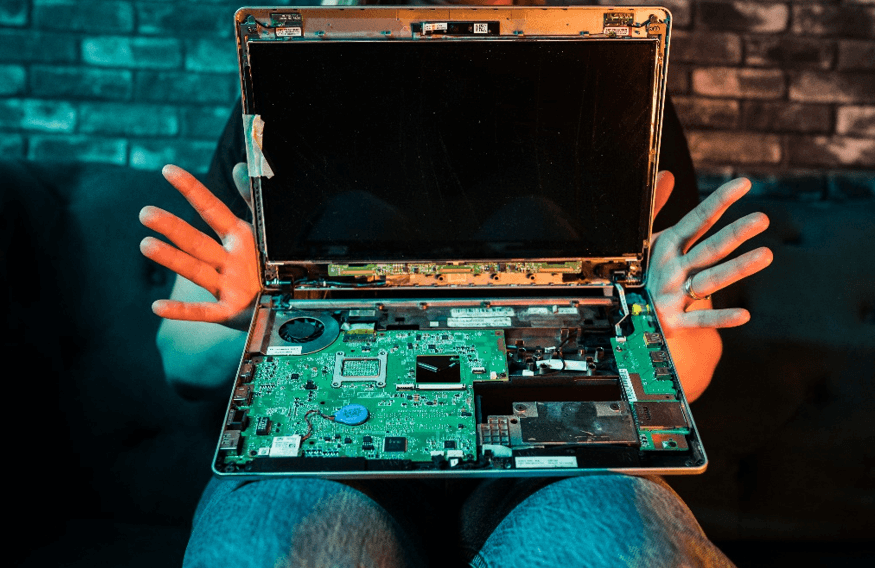
A laptop sounds simple, self-evident, and pleasantly concrete, part of the everyday life of every information worker. But what does that great tool and its choice actually include? It may come as a surprise that your laptop also contains conflict minerals.
A conflict mineral is a mineral that contributes to conflict in the world. Conflict minerals include gold, tin, tungsten, and tantalum. The production of laptops invariably requires conflict minerals, which are mined from mines, often in developing countries.
The term conflict has its roots in the conflicts that occur in mining countries, which are financed by the minerals they mine. This is a major human rights violation, and six million people have died in recent decades because of these minerals. That is, because we get electronic products in our pockets and laptops in our backpacks.
This makes everyone think about how privileged we are here in the West. SwanIT's mission is to make the IT industry more responsible.
A laptop can be a good friend for up to a decade
Reducing consumption is always at the heart of responsibility. In terminal devices, the device's useful life potential is particularly important. A properly sized, high-quality device that is well cared for can last nearly a decade. It is easy to assess all three pillars of responsibility by the length of the life cycle.
From a financial perspective, responsibility is most directly linked to costs. Using a device for a longer period naturally saves costs, depending on the financing model. Many financing models encourage using the device for only three years, even though manufacturers estimate its useful life at four to six years.
By choosing the financing and procurement method responsibly, there is an opportunity to significantly reduce costs.
At SwanIT, our financing solutions invariably encourage the use of devices for more than three years by significantly reducing the monthly financing fee.
Please don't smash your used laptop
At the end of a device's lifecycle, it must be disposed of. Device manufacturers' calculations have assumed responsible recycling and reuse. According to Finnish law, a usable device may not be crushed, but this still happens all the time.
The device should be returned for responsible recycling, which should mean that its condition and reuse potential are assessed. Finland also has a producer responsibility law, under which producers must organise the appropriate recycling of the devices they produce. By choosing the right recycling partner for your company, you can influence where your devices end up and how they are treated.
Devices in working order often end up outside Finland. Many leasing partners sell devices abroad for "reuse", and they end up in countries where the recycling infrastructure is nonexistent, and conflict situations are often ongoing. Exporting such electronic waste is illegal in principle.
Still, mountains of scrap in Ghana, for example, are a familiar sight in the newspapers. The equipment releases chemicals and other harmful substances into the environment and is handled by completely unprotected people, often children, who suffer serious, lifelong, or fatal health consequences.
Book a free consultation meeting, and we'll tell you more
We can help with all of the above questions. And what's even better, the financial benefits are significant when a company switches to a responsible IT approach.
Contact us for a free mapping meeting with a low barrier to entry. We will guide your company in making the most responsible and economically sensible equipment purchases.
We will help you and your company review the overall responsibility of your equipment base, processes, and workstations. For example, do you know the share of conflict minerals in the production of your equipment manufacturers and wholesalers? Have you investigated the materials or recyclability of the selected models?
How long do you use the equipment? Do you receive emptying reports from the equipment? And do you know where your equipment ultimately ends, or does traceability end when the equipment is handed over? We will help with these.
Related
More like this

Tuulia Virhiä
SavannaX has been selected for the Most Interesting in Data Economy 2026 - Data Economy Spotlight list by Data Spaces Alliance Finland. The recognition highlights SavannaX's work in helping organisations move away from fixed device replacement cycles toward lifecycle decisions based on real device health data.
Juhani Heinonen
SavannaX brings clear device visibility that simplifies IT management and reduces workload at Alupro
With SavannaX, the company now sees the real condition of every workstation from a single dashboard - making it possible to plan investments accurately, avoid unnecessary replacements, and extend device lifecycles with confidence.
Juhani Heinonen
With SavannaX, HL Group can see a clear, at-a-glance overview of the overall status of their device fleet and required actions, without having to search for information across multiple systems.
Certifications and standards
We’re certified for quality and sustainability
Our ISO 14001 and ISO 9001 certifications reflect our commitment to sustainability, consistency, and continual improvement in every stage of IT lifecycle management.

